Novità
La letteratura persiana tra due rivoluzioni (1900-1980)di Natalia L. Tornesello – Istituto per l’Oriente C. A. Nallino, 2025
Prossimo evento
Link utili

Dona il 5×1000 all’Istituto per l’Oriente C. A. Nallino – CF 00815120581.
Sostieni la ricerca e la diffusione della cultura orientale.
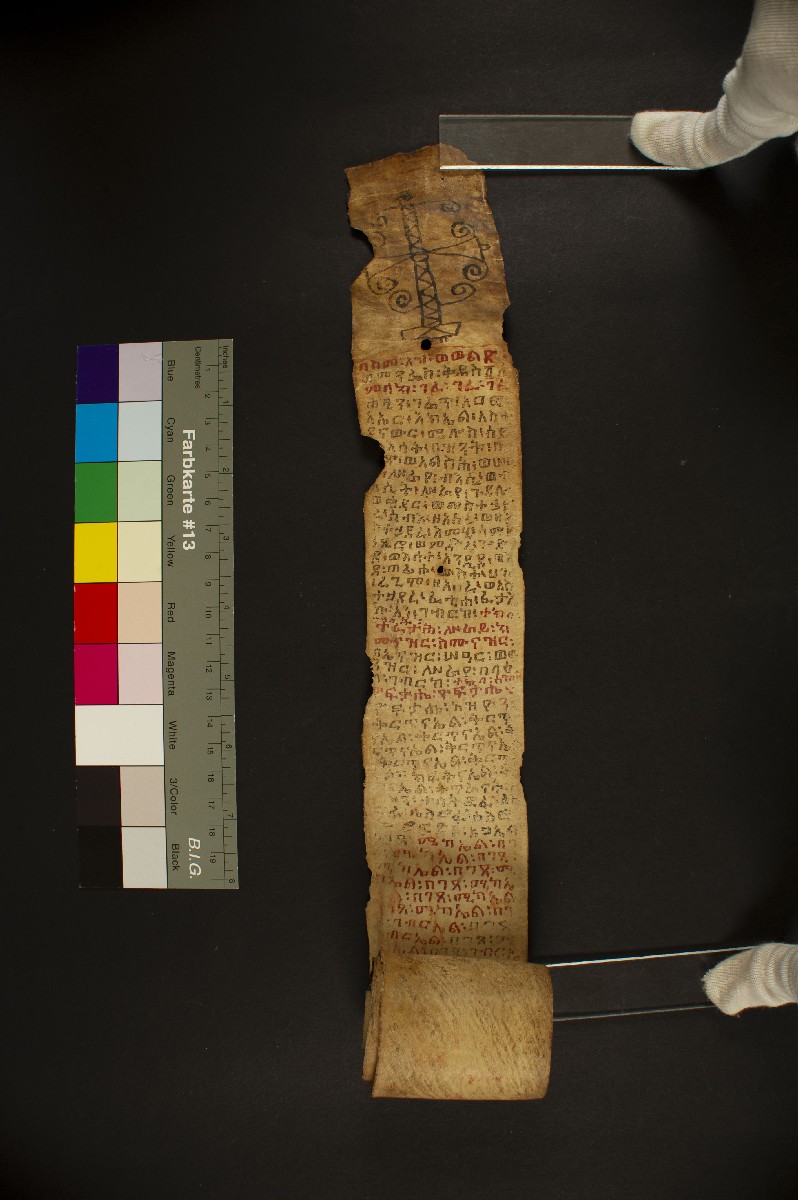
1) Unidentified asmat-prayer (Gäfä gäfä ḥaṣin gärraṭ). The prayer contains supplications for undoing charms and to the Archangels Michael and Gabriel.
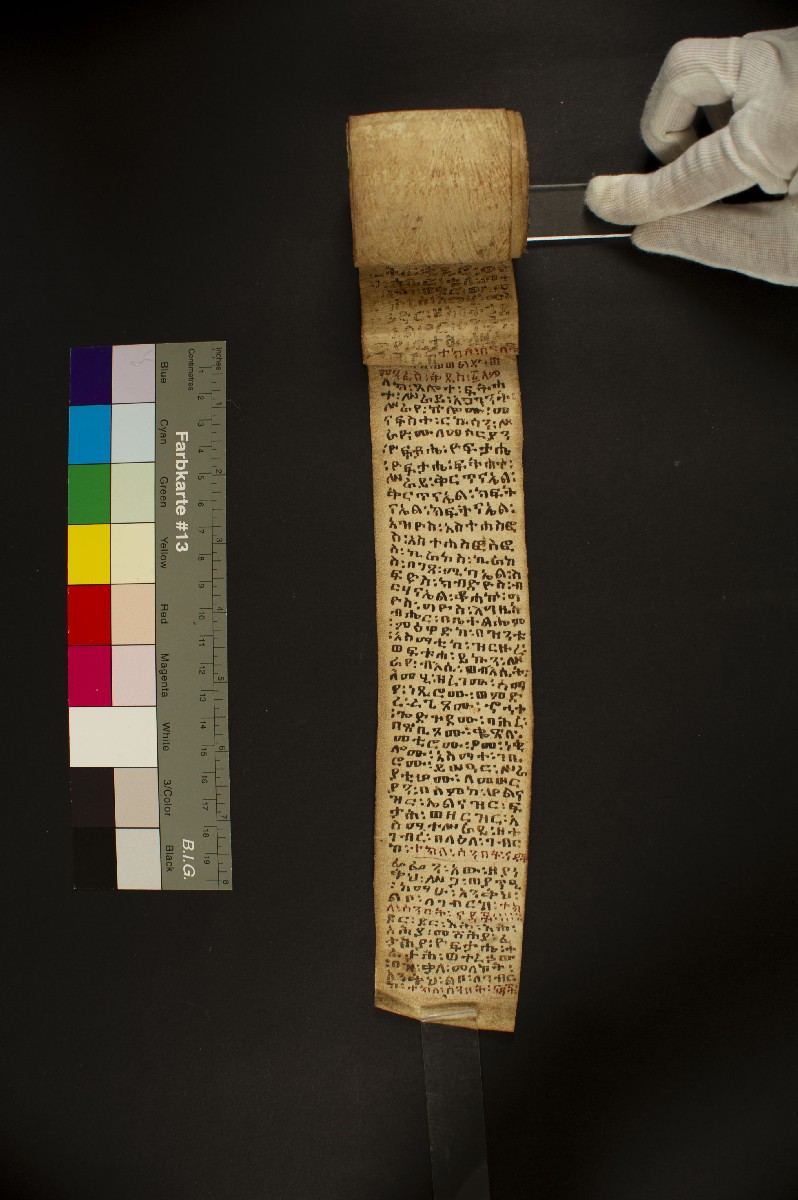
Incipit: በስመ፡ … ገፈ፡ ገፈ፡ ገፈ፡ ሐጺን፡ ገራጥ፡ አዐፎአኤር፡ እክኤል፡ አስተይናወር፡ መሎስ፡ ሰይእ[.]ት፡ በዝንቱ፡ ቡዳ፡ ወአልስሕ፡ ወሠ[.]፡ ሥራየ፡ ብእሲ፡ ወብእሲት፡ ሥራየ፡
2) Unidentified asmat-invocation for undoing charms (“Abunazǝr Sǝmunazǝr, dispel and disperse, remove and dissolve the charm of the man and the woman”).
Incipit: በስመ፡ … አቡናዝር፡ ስሙናዝር፡ ፍታሕ፡ ወዘርዝር፡ ሠዓር፡ ወመንዝር፡ ሥራየ፡ ብእሲ፡ ወብእሲት፡ ወአስማተ፡ ካህን፡ ዘተገብረ፡ በላዕለ፡ ገብርከ፡ ተክለ፡ ሰንበት፡ ፍሐዝር፡ ፍሐዝር፡ ፍሐዝር፡ በአማን፡
3) Ṣälot bäʾǝntä śǝray wä-kin (“Prayer against [any] incantation and stratagem”).
Incipit: በስመ፡ … ጸሎተ፡ በእንተ፡ ሥራይ፡ ወኪን፡ ፍታሔ፡ ተፈታሕ፡ ወተረኃው፡ ብሂሊ፡ (!) ከማሁ፡ ተፈታሕ፡ ኵሉ፡ ሥራይ፡ ወኪን፡ ወ[..]ዎን፡ ወባርያ፡
4) Unidentified asmat-invocation for undoing charms (“Sǝfaḫazǝr Sǝfaḫazǝr Sǝfaḫazǝr in truth Sǝfaḫazǝr dispel and disperse, remove and dissolve any charm”).
Incipit: በስመ፡ … ስፉኃዝር፡ ስፉኃዝር፡ ስፉኃዝር፡ በአማን፡ ስፉኃዝር፡ ፍታሕ፡ ወዘርዝር፡ ሰአር፡ ወመንዝር፡ ኵሉ፡ ሥራይ፡ እምላዕለ፡ ገብርከ፡ ተክለ፡ ሰንበት፡
5) Ṣälotä fǝtḥatä śǝrayä aganǝnt (“Prayer for undoing the charms of the demons”).
Incipit: በስመ፡ … ጸሎተ፡ ፍትሐተ፡ ሥራይ፡ (!) አጋንንት፡ ሥራይ፡ ኵሎሙ፡ መናፍስተ፡ ርኩሳን፡ ሥራዮ፡ ሙለመሰርያን፡ ዮፍታሔ፡ ዮፍታሔ፡ ዮፍታሔ፡ ፍትሐተ፡ ሥራይ፡ ቅርጥናኤል፡ ቅርጥናኤል፡ ክፍትናኤል፡
–
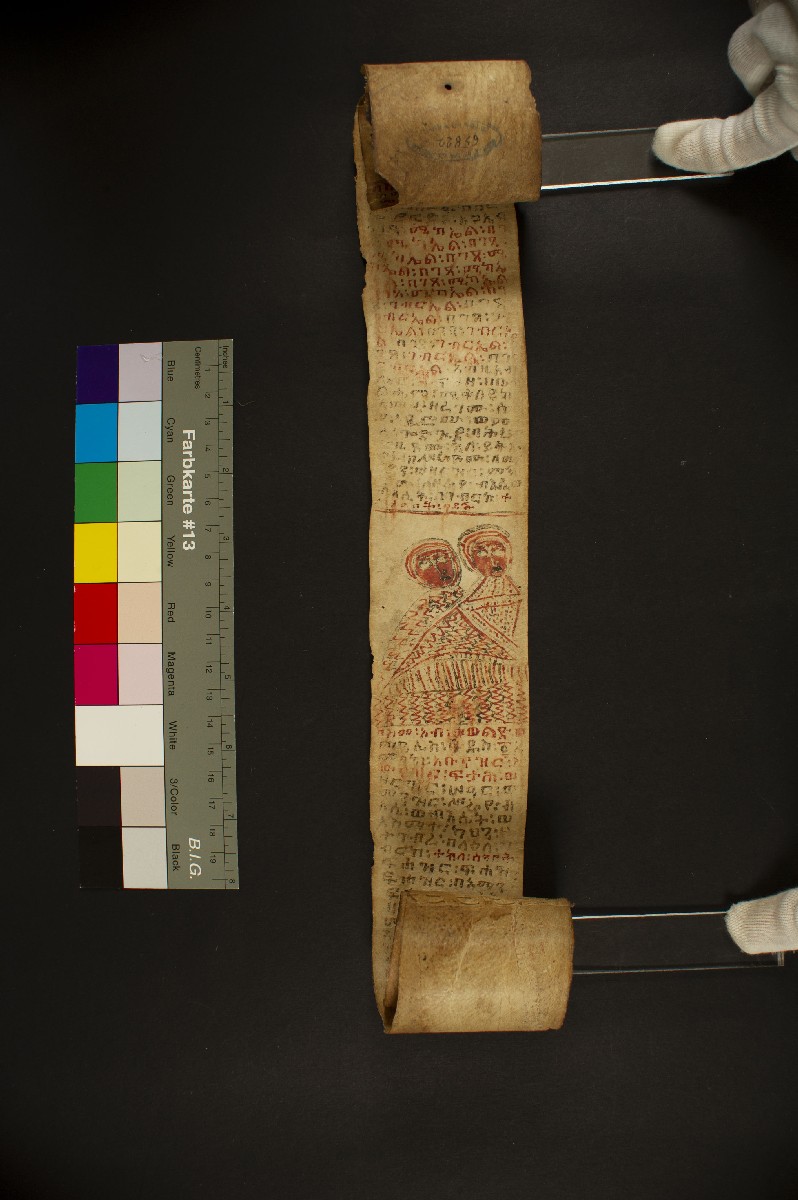
On the first strip: a stylized cross drawn in black ink on the top of the text 1.
Two human figures in black and red ink, dressed in garments decorated with zig-zag lines.
On the second strip: a cross in black and red ink, decorated with curled arms. The cross is surrounded by the following caption, containing a praise to the Cross and a supplication for the owner: መስቀል፡ መስቀል፡ መዋኤ፡ ጸር፡ መስቀል፡ መግረሬ፡ ጸር፡ መስቀል፡ [.]ሣቴ፡ ጸር፡ መስቀል፡ ቅጥቃጤ፡ ጸር፡ መስቀል፡ መልእልተ፡ ኵሉ፡ ነገር፡ አድኅኖ፡ እምአይነ፡ ጸላኢ፡ ወጸር፡ ለገብርከ፡
Unknown provenance. The manuscript came into possession of the Società Geografica d’Italia at some time before the 1930s, because it is mentioned in Silvio Zanutto’s Bibliografia etiopica (1932)